
Content Builds Community and Community Brings Sustainability
October 30, 2025
The 7 Hidden Reasons Customers Abandon Your Cart
November 21, 2025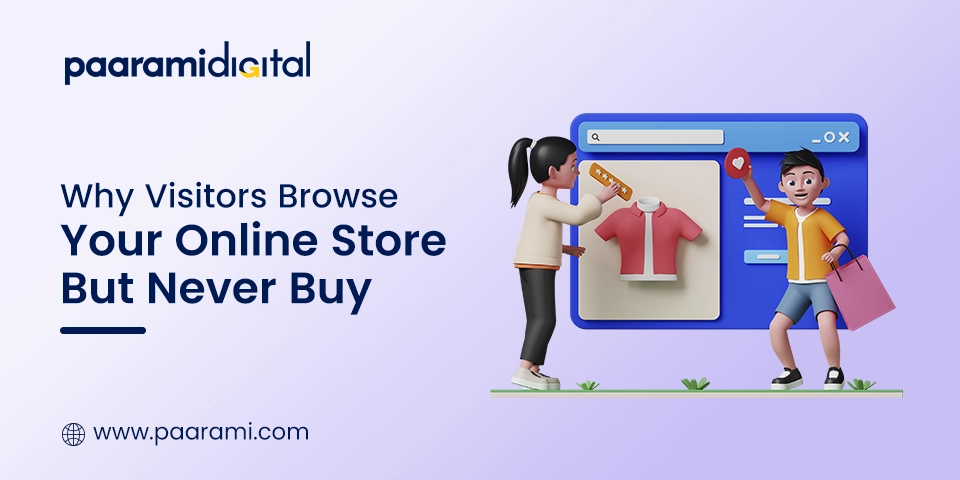
You’ve invested heavily in SEO, paid ads, and social media. The good news? Your traffic numbers are soaring! The bad news? Your cash register is silent.
You are hemorrhaging money not just the cost of acquiring the visitors, but the thousands in lost revenue from buyers who were one click away from purchasing. This isn't a traffic problem; it's a conversion gap.
The average global e-commerce conversion rate hovers between 2% and 4%. If your rate is sitting below this benchmark, you are leaving the vast majority of your potential revenue on the table. For every 10,000 visitors you drive, a 1% gap can mean the difference between 200 and 300 sales, a loss that scales into the thousands very quickly.
It’s time to stop treating your store like a crowded window display and start seeing it as a funnel with holes. Here is why your visitors are browsing but not buying, and the urgent actions you need to take right now to fix your low conversion rate in e-commerce.
The "Conversion Killers": Why Shoppers Abandon Ship
The reasons a motivated buyer walks away from a full shopping cart or even a compelling product page can be distilled into three core issues: Surprise, Friction, and Doubt.
1. The Shock of Surprise (The Checkout Collapse)
The single biggest reason shoppers abandon their carts—accounting for nearly half of all lost sales—is unexpected extra costs.
I am shopping on a website and suddenly the price rises after the end of sale. This disappoints buyers and hence they decline from buying after sudden rise in price.
The Shipping Cost Ambush: A customer is delighted with a ₹150 product until they hit the checkout and see a ₹50 shipping fee. This feels like a trick, not a transaction. They were comparing your ₹150 product to a competitor’s all-in price, and you just lost the battle.
- The Fix: Be transparent. Offer free shipping (by baking the cost into your price or setting a high minimum order value) and clearly advertise it. If you must charge, use a shipping cost calculator before the checkout page.
Hidden Taxes and Fees: Sales tax, import duties, or processing fees that only appear at the final stage create a psychological roadblock. No one likes to feel nickel-and-dimed.
The Fix: Display the most accurate final price as early as possible. If it’s a global sale, make it clear if duties are included or calculated based on their location.
2. The Drag of Friction (The Bad User Experience)
A complicated or slow shopping experience gives the buyer too much time to second-guess their purchase. In the age of instant gratification, convenience is the ultimate currency.
Slow Site Speed: For marketer every second counts. A page that takes more than 3 seconds to load will see a significant drop in conversion rate, especially on mobile. Shoppers are impatient and will bounce before the "Add to Cart" button even appears.
- The Fix: Prioritize website speed optimization. Compress images, leverage caching, and ensure your hosting can handle your traffic spikes.
Poor Mobile Experience: Over half of all e-commerce traffic is now mobile, but the desktop experience often gets priority. A tiny, difficult-to-click button, a clunky checkout form, or a cluttered layout on a smartphone is a guarantee of abandoned carts.
- The Fix: Adopt a mobile-first design philosophy. Test your entire funnel, from browsing to payment, on a phone. Ensure form fields are large, buttons are 'thumb-friendly', and text is readable.
Mandatory Account Creation: Forcing a first-time buyer to create an account before they can pay is an immediate conversion killer. It’s an extra step, an extra password to remember, and an invasion of privacy for a one-time purchase.
- The Fix: Offer a prominent 'Guest Checkout' option. You can encourage account creation after the purchase is complete, when the customer is happy and has an order to track.
Complex Checkout Flow: A checkout process with too many steps, unnecessary form fields, or confusing navigation is the digital equivalent of a long, slow-moving line at the register.
The Fix: Simplify to the absolute minimum. Use a one-page checkout if possible. Only ask for essential information. Leverage auto-fill features and progress indicators to show customers how close they are to finishing.
3. The Paralysis of Doubt (The Trust Deficit)
Online shoppers take a risk because they can’t physically inspect the product or meet the seller. If you fail to build confidence, they will leave for a brand they trust.
Low-Quality Product Presentation: Blurry photos, a single generic image, or vague product descriptions leave the shopper guessing. They need to visualize themselves using your product.
- The Fix: Use multiple, high-resolution images from every angle. Add video demonstrations. Write detailed, compelling descriptions that focus on benefits over just features.
Missing Trust Signals: A lack of visible security badges, a missing SSL certificate, or an unclear return policy makes the buyer fear for their money and data.
- The Fix: Display security badges (e.g., SSL, payment logos like PayPal/Visa) prominently at checkout. Feature a clear, easy-to-find, and generous return policy on every product page. A good return policy drastically reduces purchase risk.
Absence of Social Proof: When people shop online, they rely on the collective wisdom of others. No customer reviews or testimonials feels risky.
The Fix: Collect and display authentic, visible customer reviews and star ratings on product pages. Show user-generated content (UGC) if possible. This is the new word-of-mouth.
E-commerce Conversion Rate Optimisation: Your Urgent Action Plan
You are not doomed to a low conversion rate. Recognizing these conversion gaps is the first step to massive revenue recovery. This is where e-commerce conversion rate optimization (CRO) comes in the systematic process of increasing the percentage of visitors who complete a desired action.
1. Optimize Your Product Pages: The Decisive Moment
This is where the purchase decision is made. Don't treat it as a brochure.
- Elevate Visuals: Use 360-degree views, scale photos (product next to a person), and videos.
- Clarify Value: Ensure your Unique Selling Proposition (USP) is obvious. Why buy from you?
Use Urgency & Scarcity: Employ ethical tactics like "Low Stock," "Selling Fast," or "Limited Time Offer" to prompt immediate action.
2. Streamline Your Checkout: The Final Mile
Focus ruthlessly on reducing friction and removing surprises.
- Offer Guest Checkout: Make it the default, or at least the easiest, option.
- Multiple Payment Options: Include digital wallets like Apple Pay, Google Pay, and PayPal for a one-click purchase experience. Consider "Buy Now, Pay Later" (BNPL) options.
Show Progress: A visual progress bar keeps customers engaged and motivated to finish.
3. Build Unshakeable Trust: The Foundation of Sales
Focus ruthlessly on reducing friction and removing surprises.
- Offer Guest Checkout: Make it the default, or at least the easiest, option.
- Multiple Payment Options: Include digital wallets like Apple Pay, Google Pay, and PayPal for a one-click purchase experience. Consider "Buy Now, Pay Later" (BNPL) options.
Show Progress: A visual progress bar keeps customers engaged and motivated to finish.
4. Re-Engage the Lost: Recovering Abandoned Sales
Not everyone who leaves is gone forever. You can still recapture thousands of lost dollars.
- Abandoned Cart Emails: Send a sequence of 2-3 targeted emails shortly after abandonment. The first should be a simple reminder; the second can include a small incentive (e.g., free shipping or a 5% discount).
Retargeting Ads: Use platforms like Google and Facebook to show targeted ads of the exact products the visitor viewed or added to their cart. This serves as a powerful, non-intrusive reminder.
Ready to Close the Conversion Gap? Meet Paarami Digital
Now stop letting your paid traffic and hard-earned visibility evaporate into lost revenue. At Paarami Digital, we specialise in closing the very conversion gaps discussed in this article, turning the expensive trickle of traffic into a sustainable flood of sales.
We move beyond vanity metrics by focusing on e-commerce conversion rate optimisation (CRO): conducting deep-dive audits, analyzing user behavior with heatmaps and A/B testing, and streamlining your checkout process to eliminate friction. From designing mobile-first product pages that build instant trust to implementing high-ROI abandoned-cart strategies, Paarami Digital provides data-driven expertise to ensure every visitor takes the desired action. Stop losing thousands and start converting your existing traffic into immediate, measurable profit.
The Urgency is Now: You are Losing Thousands
Every single visitor that leaves your store without buying is a direct loss of money and an expensive missed opportunity. You've paid for the traffic, but you're failing to convert. This is not a sustainable model.
Stop chasing more traffic to a broken funnel. The key to how to increase online store sales is not more visitors; it's maximizing the value of the visitors you already have. By focusing on your ecommerce conversion rate optimisation, by eliminating surprise, reducing friction, and building trust you can plug the holes in your funnel and immediately start turning browsers into buyers.
The clock is ticking. Start A/B testing, analyzing your site speed, and simplifying your checkout today. The thousands of dollars you're currently losing are waiting to be converted into profit.
FAQs
1. What is the average e-commerce conversion rate I should aim for?
Global average conversion rate typically falls between 2% and 4%.
2. What is the single biggest reason shoppers abandon their carts?
Unexpected extra costs, primarily high shipping fees, are the single biggest cause of cart abandonment.
3. What does "mobile-first design" mean in the context of CRO?
It means prioritizing the design and functionality of your entire store for a flawless mobile experience before scaling up to desktop.
4. What is the fastest way to build immediate trust on a product page?
Displaying clear, authentic customer reviews with ratings and a generous return policy immediately builds buyer confidence.
5. What is a simple, high-impact action to recover lost sales?
Implementing an effective sequence of abandoned cart emails is a simple, high-ROI tactic for recovering lost sales.